1. YOU STILL HAVE CERAMIC FUSES
If your board has individual ceramic fuses that need rewiring when they blow, it's likely pre-1970s. No RCD protection, doesn't meet current standards.
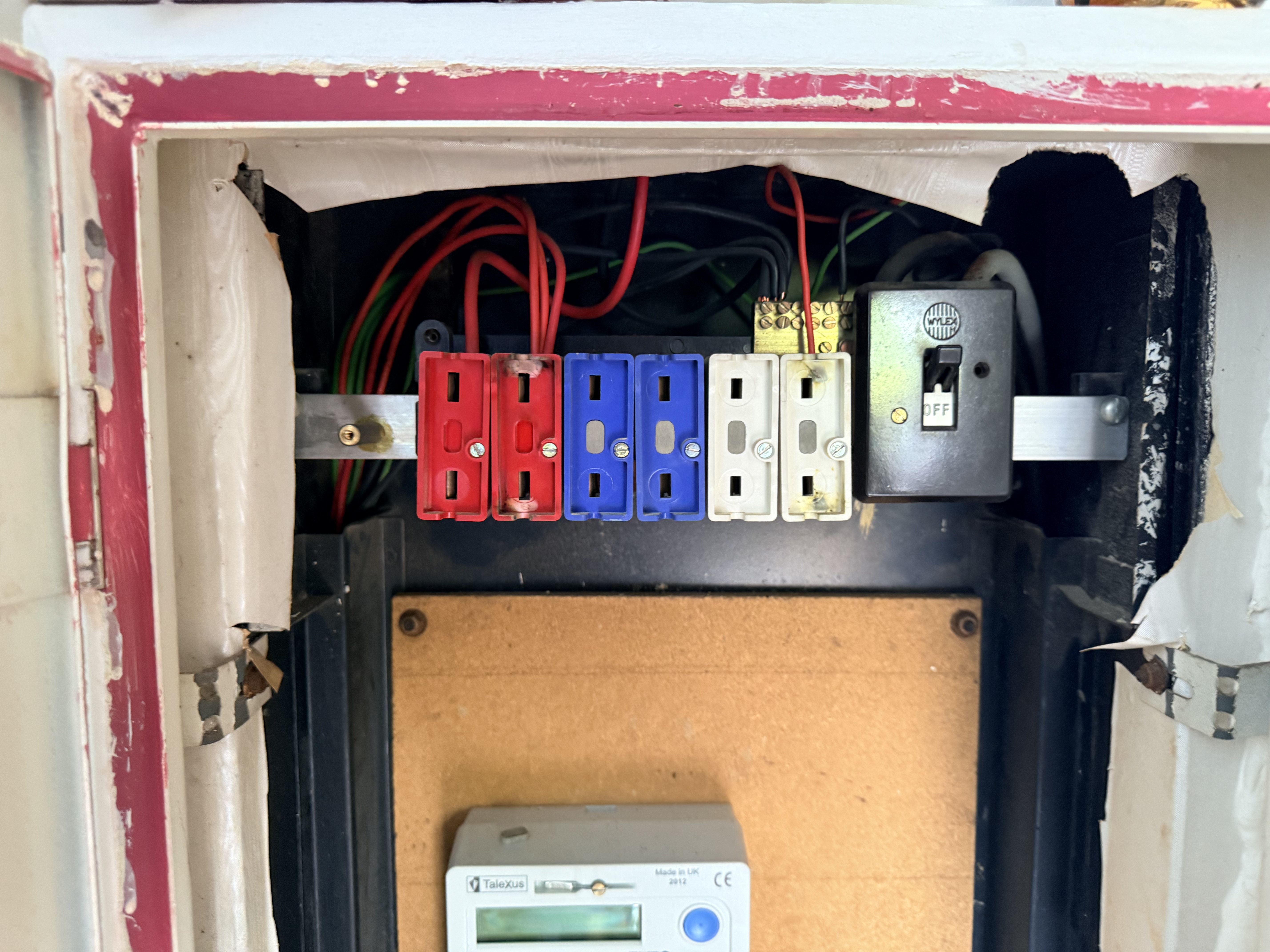
Old rewireable fuse board — ceramic fuses, no RCD. A common C1 or C2 EICR fail.
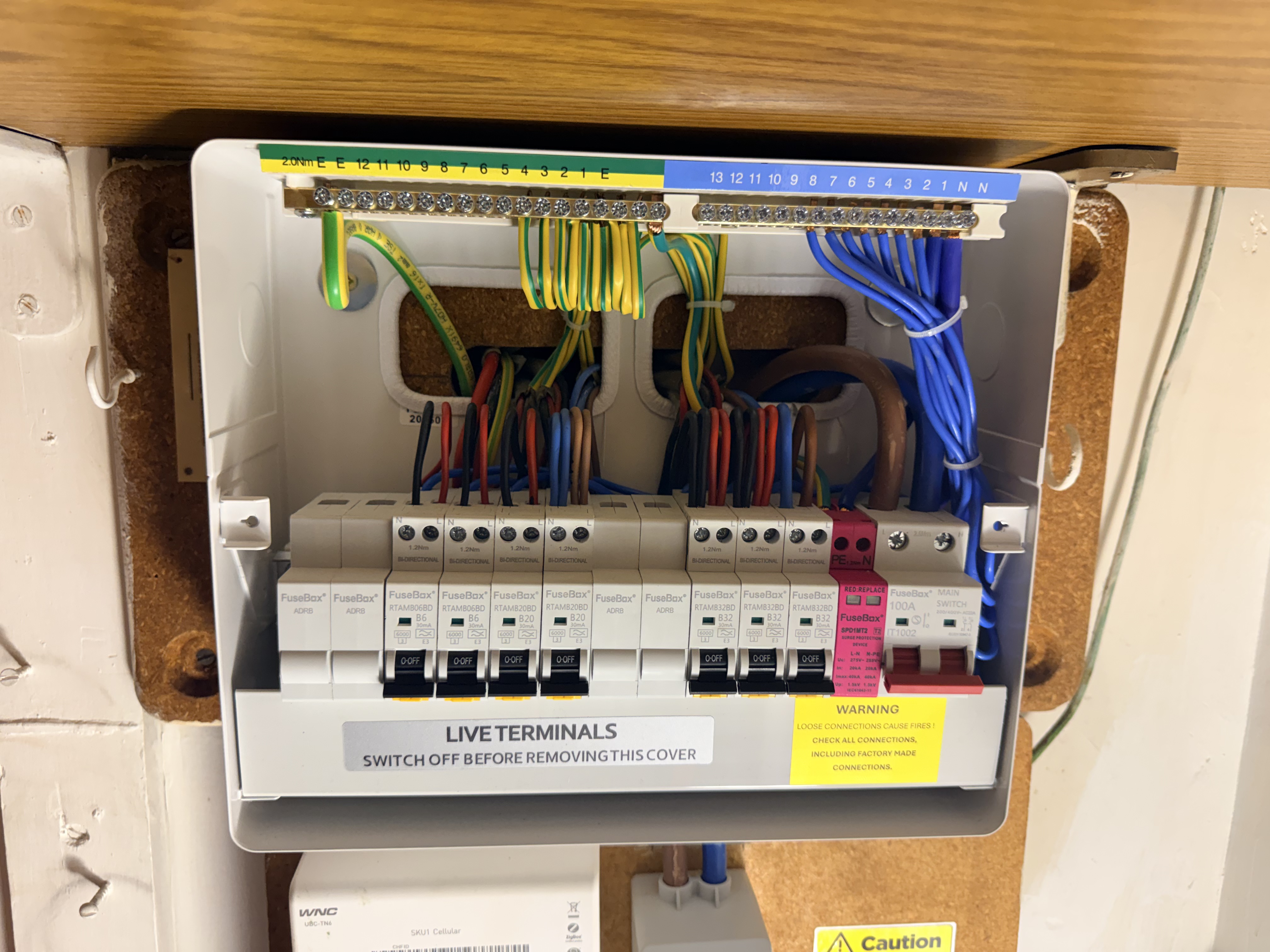
New FuseBox — full RCBO protection, SPD surge protection. Installed and certified by MN Electrical.
2. NO RCD PROTECTION
An RCD switches off electricity automatically when it detects a fault. Since 2008 all new consumer units must include RCD protection. If yours predates this, an upgrade is strongly recommended.
⚡ Did you know? RCDs can prevent approximately 30% of electrocution deaths and significantly reduce electrical fire risk.
3. CIRCUITS KEEP TRIPPING
Persistent tripping on the same circuit usually means a faulty appliance, overloaded circuit, wiring fault or failing MCB. Don't just reset it — get it properly diagnosed.
4. BUZZING, CRACKLING OR BURNING SMELLS
Any buzzing or burning smell from your consumer unit is a serious warning sign. Switch off at the main switch and call an electrician immediately. This is an emergency.
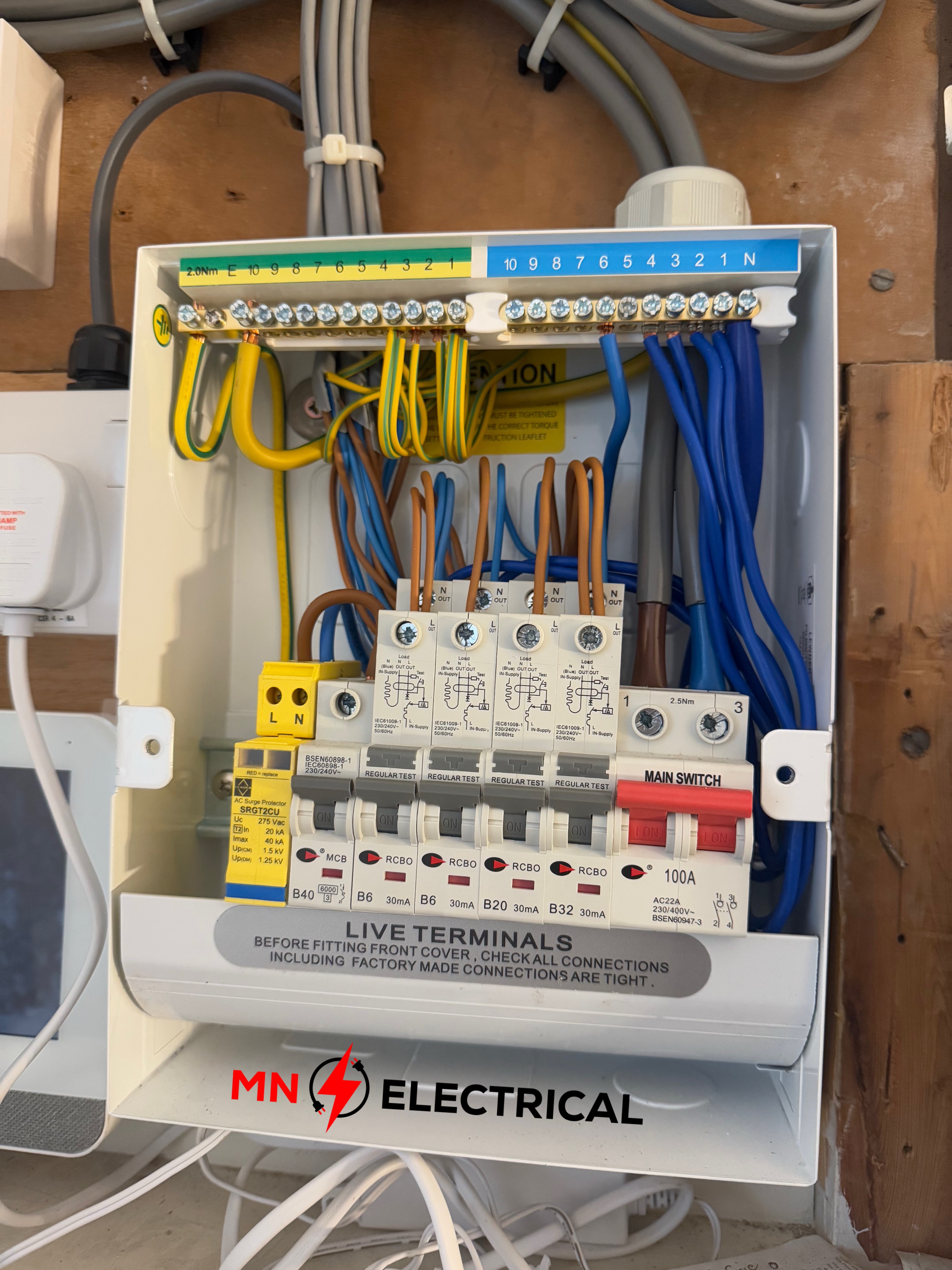
New consumer unit — RCBO protection, SPD surge device. MN Electrical certified.
5. SCORCH MARKS OR DISCOLOURATION
Visible scorch marks or melted plastic around sockets, switches or the consumer unit means heat has been generated — a fire risk that needs immediate attention.
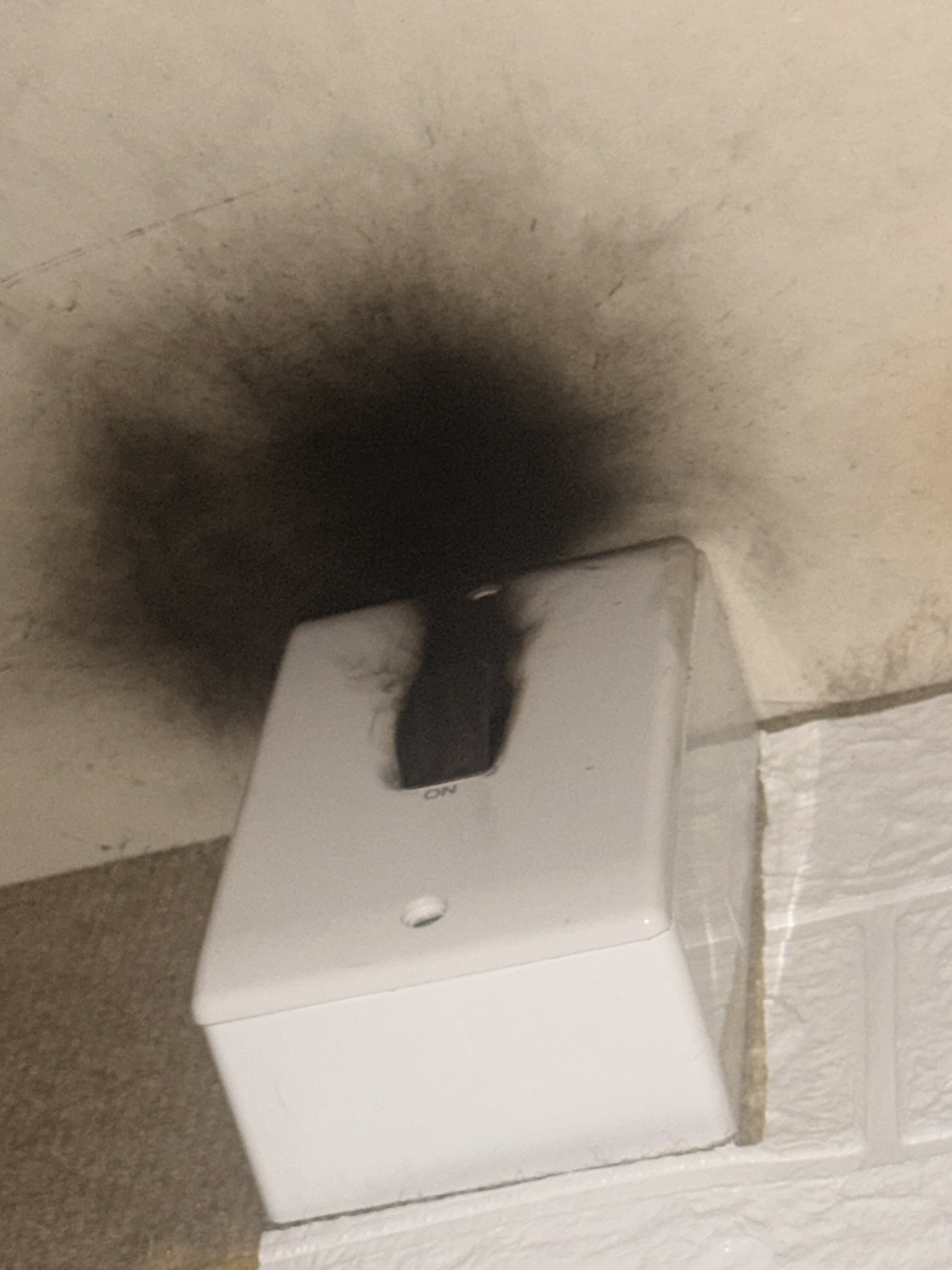
Burnt isolator switch in a London dog grooming salon — arcing from a faulty connection. C1 emergency finding. MN Electrical.
6. YOUR BOARD IS IN A DANGEROUS LOCATION
Consumer units shouldn't be in bathrooms, above sinks or in damp areas. If yours is in a hazardous location, relocation as part of a replacement is worth considering.
7. YOU'RE ADDING NEW CIRCUITS
Adding an EV charger, extension, new kitchen or garden outbuilding? It's often the right time to upgrade the consumer unit — many older boards don't have spare ways.
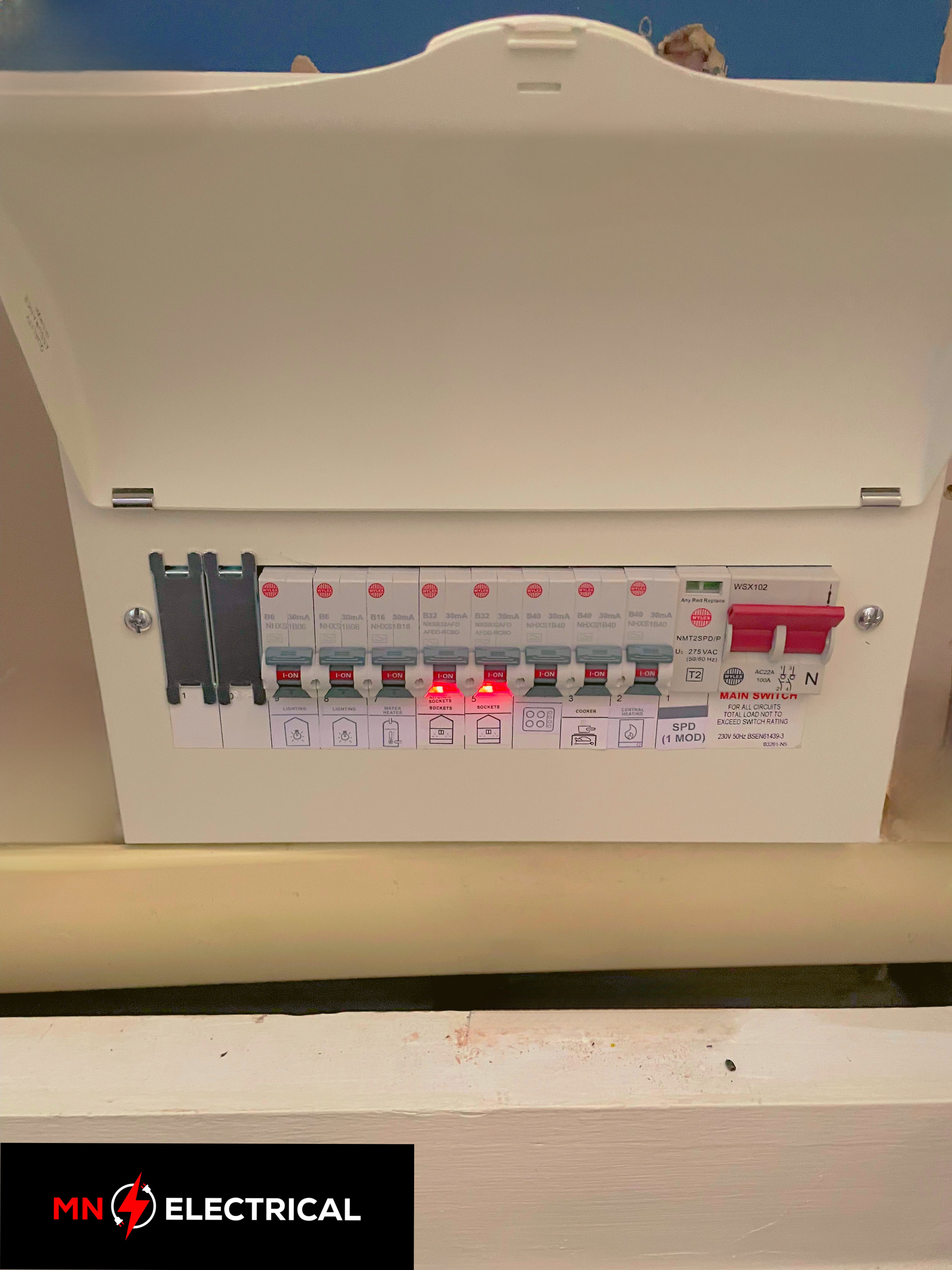
AFDD consumer unit in a London care home — the highest level of electrical protection available.
THINK YOUR FUSE BOARD NEEDS REPLACING?
Free written quote, same-day work in most cases, full RCBO protection and Part P certification on completion.